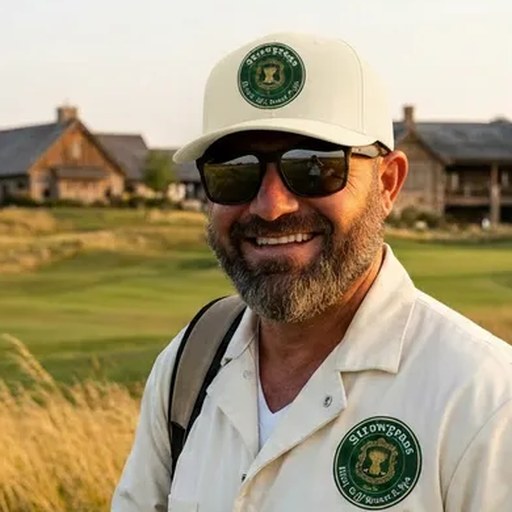
The name is a promise about the ground. Strawgrass — straw and grass, the wild and the kept — and the whole design philosophy of the place is hidden in that single word. We wanted a course that looked as though the prairie had simply agreed to be played upon.
Off the lines of play, we left the native grasses to do what they have always done: stand tall, go gold in August, lean with the wind, and swallow any ball struck without conviction. They are not rough in the punitive sense. They are the prairie, and they are part of the test — a reminder that this is open country, and open country does not forgive a lazy swing.
The playing surfaces are another matter. The greens are small, true, and held to a standard the surrounding wildness is not. The contrast is deliberate. A round here is a negotiation between the tended and the untamed, and the best players are the ones who respect both.
We did not tame the prairie. We made a truce with it, hole by hole.
The brief we gave our architects was a single sentence: build something that looks like it was always here. The grasses are how they kept that promise. Nothing imported, nothing that fights the land. From a distance you might not be sure where the course ends and the country begins, which is exactly the feeling we were after.